Overview: Treating a build-to-rent (BTR) community like a standard apartment complex is a major leasing mistake because these renters aren’t looking for a luxury scene; they are looking for the space and privacy of a real home. To win, your BTR marketing needs to stop selling units and start selling the freedom of having your own yard, a private garage, and no neighbors living above or below you. Since most people still search for apartments, your ads need to act as a switch-pitch that catches their attention and shows them they can have a house-like lifestyle without the stress of a mortgage.
Is Your Apartment Strategy Killing Your BTR Lease-Up?
For years, the multifamily industry lived by a standard playbook.
If you launched a new community, you focused on amenities and proximity to the city center. You talked about “luxury living” in a high-density environment.
But the rapid rise of build to rent (BTR) has completely changed the game.
If you try to market a BTR community using an old apartment lease-up strategy, you are leaving money on the table.
BTR sits in the sweet spot between apartment living and homeownership. However, the renter’s mindset is entirely different.
To win, you must stop selling units. You must start selling autonomy. Successful BTR marketing requires a total shift in how you communicate value.
Selling the House, Not the Complex
The biggest mistake teams make is treating BTR homes like apartments with garages. A renter looking for a four-bedroom house has a different intent than someone looking for a downtown studio. In traditional multifamily marketing, you sell the social scene. In BTR marketing, you sell space and serenity.
These prospects want freedom: from neighbors above or below them and from shared hallways. They want the feeling of a real neighborhood without the stress of a mortgage.
Your branding should focus on yards, cul-de-sacs, and privacy. If your brand looks like a typical apartment complex, you will lose high-intent leads.
The Switch-Pitch Strategy for Search
One of the hardest parts of BTR marketing is search volume. Far more people search for “apartments for rent” than “build to rent communities.” Most renters do not even know the term BTR exists yet. This is where a smart BTR lease-up strategy comes into play.
You must walk a tightrope with your digital ads. You should still bid on apartment keywords. However, your BTR ads must act as a switch-pitch.
Your ad copy should say something like:
Looking for an apartment? Consider a home for rent instead.
You catch them during their search. You show them a lifestyle upgrade they did not know was possible. Professional services for BTR marketing focus on capturing this traffic without wasting your budget on unqualified clicks.
Want to dive deeper into how we scale build to rent communities? In this episode of the Multifamily Marketers Podcast, we discuss the messaging secrets that drive long-term retention and how to bridge the gap between apartment and home search volume.
Why Websites Must Be Different
A generic apartment website is a conversion killer for BTR. A typical apartment site might lead with a rooftop pool. A high-performing BTR site needs to lead with floor plans and home layouts.
BTR prospects are very intentional. They want to see the layout of the home, the size of the garage, and the private yard space. They are looking for a long-term fit for their family. This means they care more about the interior flow of the house than a fitness center.
Your website architecture must feel residential. It should mirror the peacefulness of the community. If the user experience feels like a crowded apartment portal, the prospect will bounce. Good BTR marketing depends on a digital experience that feels like a home.
Data Integrity and AI Search Readiness
In 2026, multifamily marketing is driven by AI search. Tools like Gemini and Perplexity look for specific facts.
They want to know your exact pet fees. They want to see your real-time availability. If your data is inconsistent across the web, AI will not recommend you.
This is a core part of any BTR lease-up strategy. Your data must be clean. This includes your Google Business Profile, your website, and your ILS listings.
AI search engines reward transparency. They favor properties that provide clear, factual answers. This is how you win the answer box and get recommended to local renters by digital assistants.
The Long-Term Value of the BTR Renter
Lease-up timelines for BTR can be slower. The renter is more picky. They are not just giving a 60-day notice. They might be selling a home or moving a large family.
The payoff is worth the wait. Once a BTR community stabilizes, retention is very high. People do not move out of a four-bedroom house after one year. Their lifetime value is much higher than that of an apartment renter.
This is why BTR marketing services are a great investment. You are building a stable, long-term community rather than a high-turnover complex.
If you are ready to stop using a one-size-fits-all approach, we can help. You can start by learning more about our BTR marketing services.
Hyper-Local Content for Better Ranking
To rank well, you must stop writing for the city. You must start writing for the block. Mention the specific coffee shop across the street. Talk about the bus line that stops at your front door. This builds semantic relevance.
AI search bots look for these local details. They want to see that you are an authority in your neighborhood. This is a key part of modern multifamily branding. It proves you are a real, physical part of the local ecosystem. High-quality BTR marketing builds these local signals into the site content from day one.
Success in the Real World
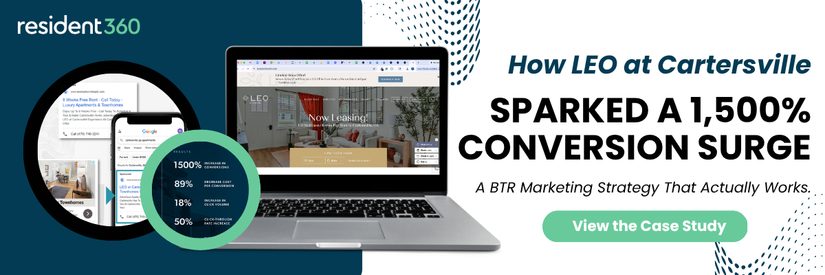
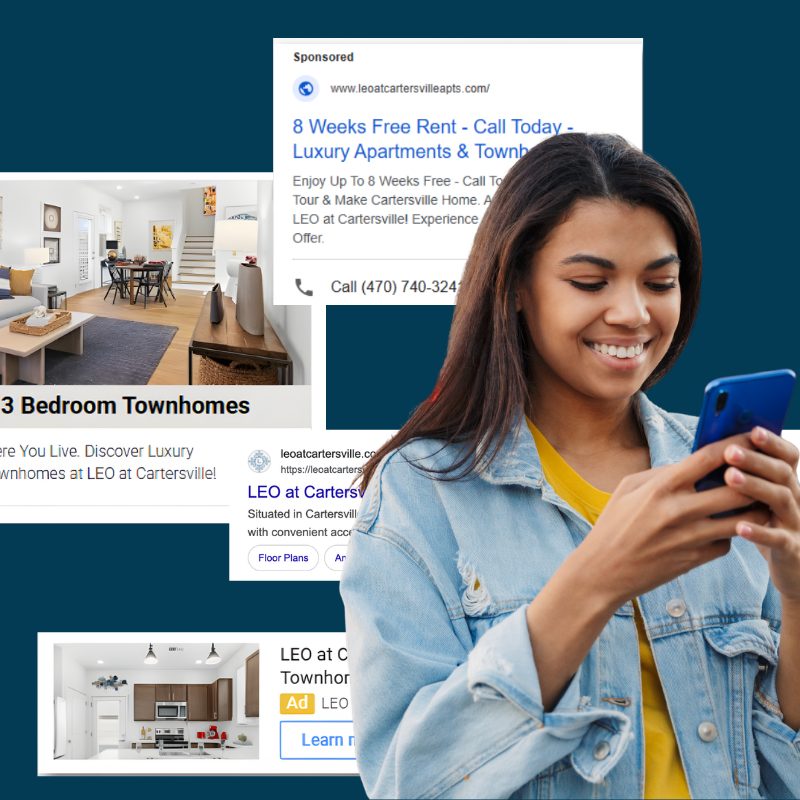
Want to see these strategies in action? We helped a community achieve massive results by shifting their digital approach. Our BTR lease-up strategy used targeted ads and data-driven targeting to crush their goals.
Check out our case study to see How Google Ads Drove a 1,500% Conversion Surge for LEO at Cartersville.