
AI Overview: Many multifamily operators mistake a drop-off in signed leases for a lack of digital market reach. True portfolio optimization requires looking past raw apartment marketing traffic metrics to evaluate conversion velocity at every stage of the rental funnel. Diagnosing these performance gaps helps operators audit team response times, maximize their apartment marketing budget, and align digital assets with on-site operations.
The Disconnect Between Traffic and Signed Leases
“The leads are bad.”
If you manage property portfolios or run corporate marketing for a multifamily operator, you hear this exact phrase every week. Site teams point fingers at corporate, claiming that a major portion of the monthly apartment marketing budget is being used to deliver unqualified prospects. Meanwhile, the marketing division points at the dashboard, proving that total apartment marketing traffic and guest card volumes are actually higher than ever.
This internal friction happens because teams evaluate entirely different metrics. The marketing department focuses heavily on lead generation, celebrating high-volume inquiries and click-through rates. Conversely, the on-site leasing agents judge quality solely by the final application. The reality is that both teams can look at the same user data and draw completely different conclusions.
A prospect who submits an inquiry is not a bad lead simply because they do not sign a lease within 48 hours. Modern renters take a non-linear path to find an apartment.
A lead might be researching local submarkets, waiting on a current lease to expire in 60 days, or relocating across the country later in the summer. Those are still highly valid, intent-driven prospects. They require consistent nurturing, but property teams frequently write them off as dead traffic because they aren’t ready to sign a lease tomorrow. Shifting your focus away from raw volume allows you to evaluate the actual health of your multifamily leasing funnel.
Mastering True Apartment Marketing Traffic Funnel Metrics
To understand whether your digital campaigns are pulling in the right audience, you must look beyond the sheer volume of your raw apartment marketing traffic. Instead, analyze the specific micro-conversion points where prospects drop out of the system.
The first diagnostic metric to measure is your lead-to-tour conversion rate. If a property receives 200 inquiries a month but only schedules five property tours, something is fundamentally broken at the top of the funnel.
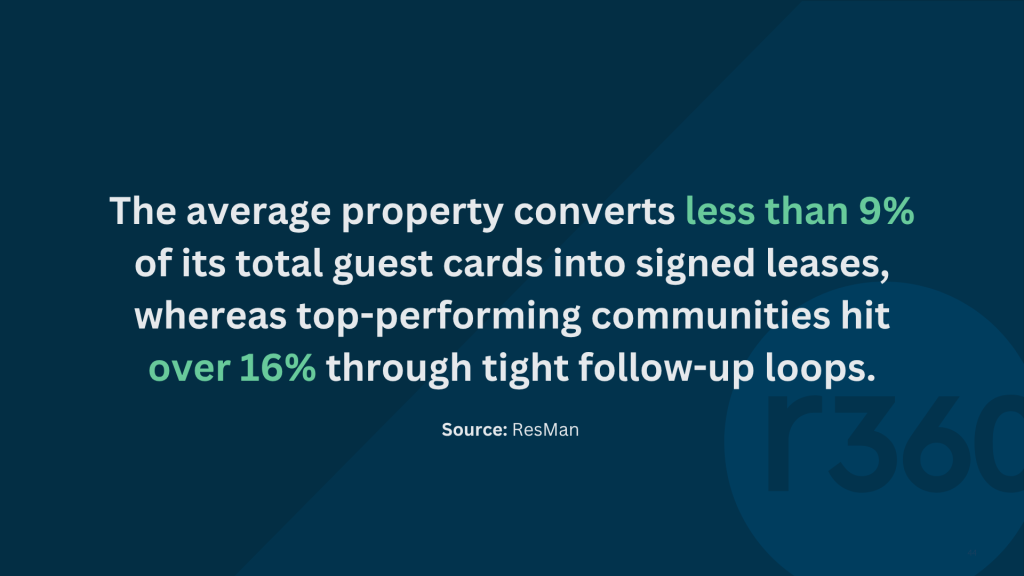
Recent multifamily data benchmarks from platforms like ResMan show that the average property converts less than 9% of its total guest cards into signed leases. In contrast, top-performing communities hit over 16% through tight follow-up loops.
Once a prospect makes it through the front door, you need to track the tour-to-application rate. A high tour volume paired with a low application rate typically signals a physical property mismatch, a pricing strategy issue, or an on-site sales objection that went unaddressed.
Finally, look at your application-to-lease rate. If applicants walk away or fail screening at the final stage, your digital campaigns might be targeting the wrong income demographic or over-promising concessions in the ad copy.
Evaluating property management lead quality requires looking at the entire continuum of data. If prospects raise their hands but the journey breaks down mid-funnel, you are dealing with an operational process gap, not a traffic problem.
Real-Time Responsiveness (The Hidden Conversion Leak)
You can deploy the absolute best multifamily lead generation strategy on the market, but it will fail if your site staff takes hours to follow up. In the current rental market, speed to lead defines your actual conversion success.
Prospects look at multiple communities simultaneously. When a renter submits an inquiry at 10 p.m. on a Sunday, they expect immediate engagement.
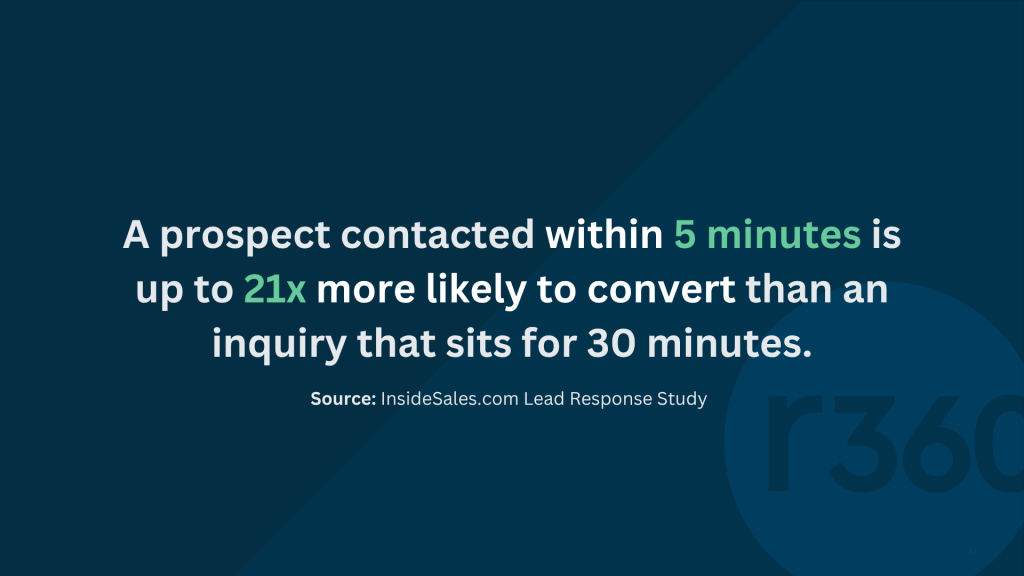
According to Real Trends/InsideSales.com’s Lead Response Study, a prospect contacted within five minutes is up to 21 times more likely to convert than an inquiry that sits for 30 minutes. Yet, across the industry, the average manual response time from an on-site team hovers closer to 15 hours.
If your team takes three days to return an email or follow up on a voicemail, that prospect has already toured two other properties down the street. The lead wasn’t low quality; your response time was simply late.
On-site leasing teams cannot remain glued to their desks every minute of the day. For a small team managing a 200-unit asset, balancing live tours, resident issues, and incoming digital leads is an impossible juggling act.
To solve this without sacrificing prospect satisfaction, operators need to implement automated systems that handle instant, after-hours outreach so high-intent prospects never experience a delay.
To hear an in-depth, unscripted debate on how these communication gaps impact your daily on-site conversions, listen to our full conversation on Episode 44 of the Multifamily Marketers Podcast.
How to Audit Your On-Site Leasing Operations
When local rent growth cools and your marketing metrics start slipping, do not automatically change your paid ad spend or swap out your keyword targets. Run an internal audit first to find out where the friction lives.
You can test the actual health of your leasing process by executing four specific steps:
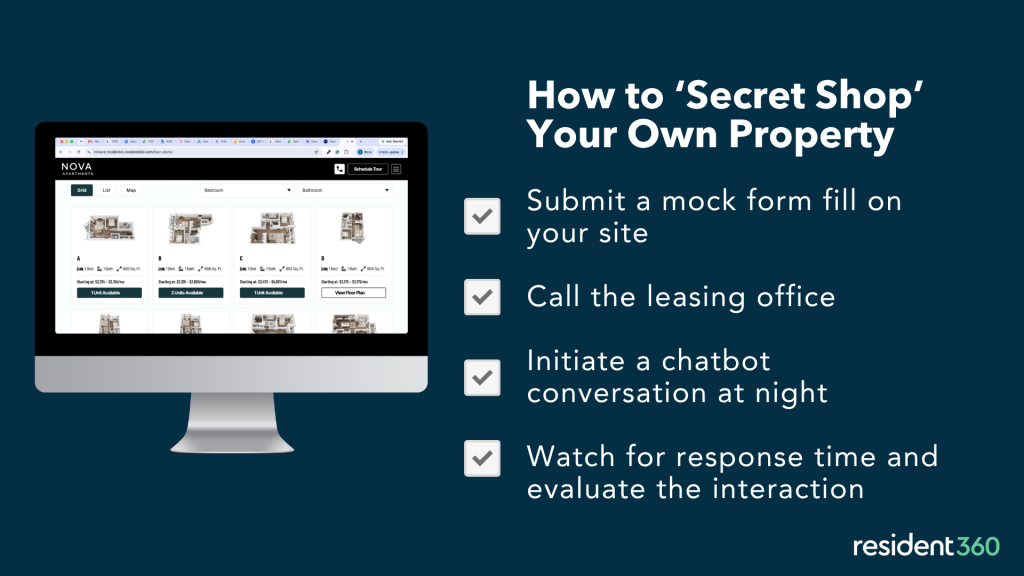
- Secret shop your own property: Submit a mock form fill on your property website, call the leasing office directly, or initiate a chatbot conversation at night. Watch exactly how long it takes to get a response and evaluate the quality of the interaction.
- Listen to call recordings: Review the inbound phone transcripts inside your tracking platform. Determine if your leasing professionals are actively steering conversations toward scheduling property tours, or if they are simply answering basic pricing questions and hanging up.
- Execute a multifamily CRM audit: Open up your guest card dashboards and read the user notes. Check if the on-site staff regularly logs follow-up attempts or if leads routinely fall into a black hole after the initial contact.
- Track the exact timestamps: Calculate the average response time for daytime inquiries versus weekend apartment marketing traffic.
Most of the answers to your portfolio performance questions are hiding inside these four touchpoints. If your lead tracking shows high contact numbers but zero scheduled tours, your site team needs training or operational support to improve their apartment leasing funnel performance.
For more apartment marketing ideas like this, read our blog for The Ultimate Guide to Apartment Marketing Ideas.
Adjusting Your Digital Campaigns for High-Intent Traffic
Sometimes, apartment marketing campaigns genuinely create their own quality issues. If your audit reveals that your on-site team responds instantly, logs every call, and handles follow-ups flawlessly, then it is time to look critically at your corporate digital execution.
The most common culprit is broad keyword targeting. If your paid search campaigns focus on highly generic terms like “apartments for rent,” you will waste your apartment marketing budget on people who are casual browsers or looking outside your target location. Refine your paid search strategy to focus on long-tail, high-intent phrases that match your exact asset class.
Another frequent failure point is misleading ad copy. If your social media campaigns highlight a massive concession or an outdated starting rent price just to drive clicks, you will generate high lead volume from prospects who cannot actually qualify for the unit.
The moment they discover the real pricing structure during the follow-up call, they walk away. Your property marketing must maintain radical transparency. Align your ad copy, your floor plan availability, and your community lifestyle depictions to match the exact reality on the ground.
Aligning Your Strategy for AI Visibility and Traditional Search
Improving your organic search leads in the current digital landscape requires a pivot in how you structure your online content. Traditional multifamily SEO practices focus almost exclusively on keyword placements for standard search engines, but search habits are evolving rapidly. With the rise of AI-driven search models and automated recommendation systems, properties must optimize for digital visibility across multiple platform types.
AI search assistants pull data from highly verified, structured sources. To ensure your properties appear when an AI search recommends the top assets in a local submarket, your website infrastructure must feature clean schema markup, accurate citation data, and direct integrations with your leasing software.
If an AI platform crawls a property site and encounters conflicting data regarding floor plan availability, rent pricing, or pet policies, it will exclude that community from its generated search results.
Achieving a high lead-to-lease conversion rate requires building a seamless bridge between your digital presence and your daily property operations. When you deliver clear data to the search platforms and back it up with an immediate follow-up process on-site, you eliminate the funnel leaks that drain your apartment marketing budget.
Stop chasing raw lead numbers. Focus your energy on refining execution at every single stage of the prospect journey, and the leases will follow.