Overview: Google Ask Maps is changing the multifamily leasing funnel by turning a static map pin into a live AI concierge. This new search experience allows renters to get real-time answers about your property directly within the Google Maps interface without ever clicking through to your website. Because the AI relies on a mix of your website data and resident reviews to form its answers, the focus of search visibility has shifted. Understanding how to align your marketing claims with actual resident sentiment is now the most effective way to ensure your community is the one recommended in these new conversational search results.
Why Freshness Is the New Domain Authority
For years, the Google Business Profile (GBP) has been the digital front door for multifamily properties. It was the place where prospects checked your location, scrolled through a few photos, and skimmed your latest reviews. It was a static resource, a map point.
That is officially changing.
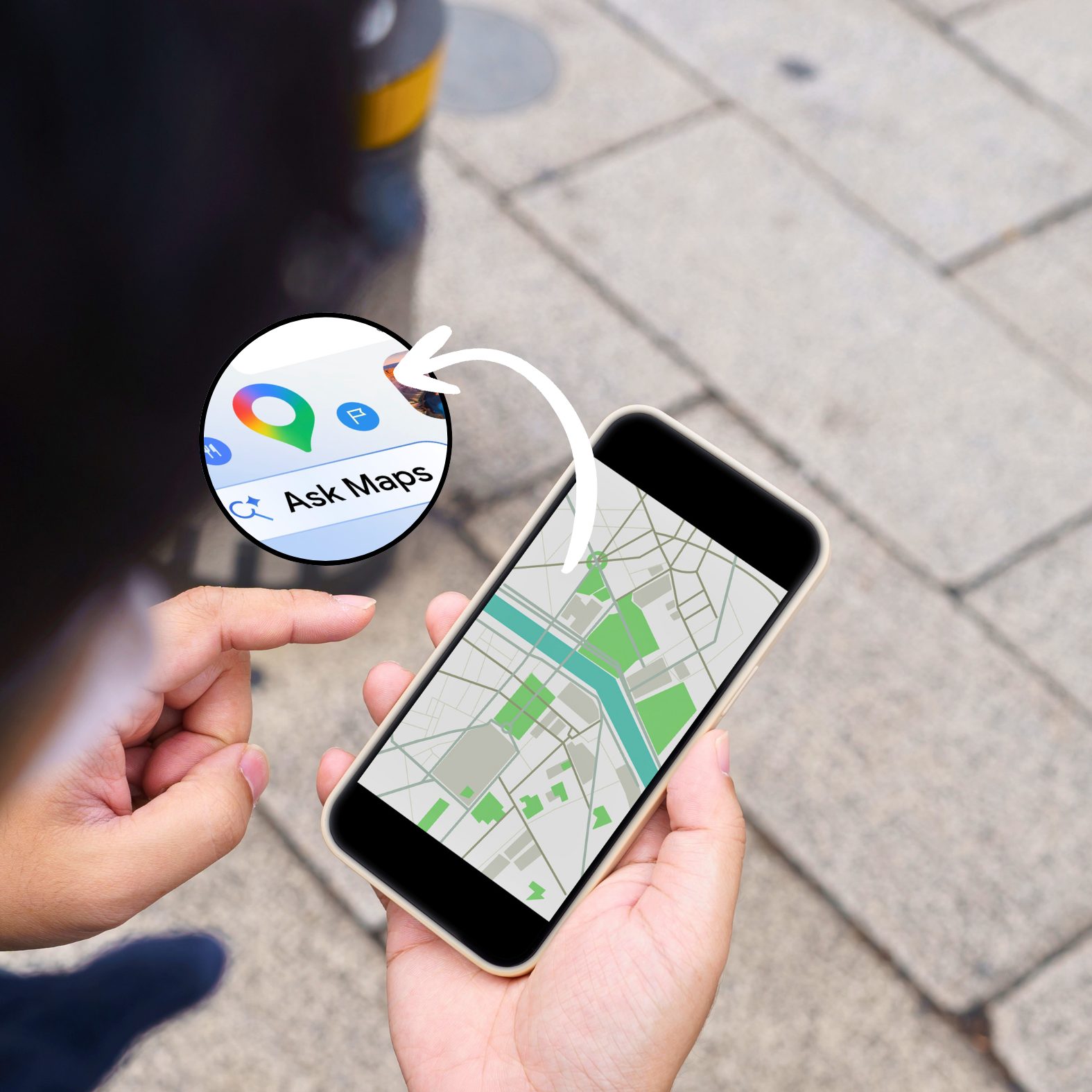
Google is currently rolling out “Ask Maps,” a conversational AI integration within Google Maps that transforms search from a directory into a dialogue. For multifamily marketers, this isn’t just a small update; it’s a fundamental shift in how renters discover and evaluate your community.
What Is Ask Maps?
Ask Maps allows users to engage in a chat-based experience directly within the Google Maps interface. Instead of manually clicking through tabs to find information, a prospect can simply ask:
- “Is this apartment complex close to the local hospital?”
- “What do people say about the gym equipment here?”
- “How long is the walk to the nearest grocery store?”
The AI then scrubs your Google Business Profile, your website content, and (most importantly) your resident reviews to provide a real-time, conversational answer. The prospect never has to leave the map to find the truth about your property.
From Search Results to Conversational Discovery
In the traditional search model, Google acted as a librarian. It provided a list of resources and left the user to do the heavy lifting of clicking, reading, and comparing. With the arrival of Ask Maps, Google has moved from being a librarian to being a personal assistant.
Instead of typing keywords and scrolling through blue links, prospects are now engaging in natural language dialogues. They are asking complex, multi-layered questions directly within the map app. A user might ask if a specific building is within walking distance of a quiet park. They might inquire if a community has reliable high-speed internet for remote work.
The AI does not just provide a link to your website as an answer. It synthesizes a unique, conversational response by scrubbing your Google Business Profile, analyzing your photos, and reading every word of your resident reviews. This means the prospect gets a curated summary of your property without the friction of navigating a website.

Rethinking the Value of Your Multifamily Website
A zero-click world does not make your property website obsolete. It simply changes the purpose your website serves. If Google answers top-level questions via Ask Maps, your website must provide the granular data the AI needs to feed its responses.
Ask Maps relies on a massive pool of information to formulate recommendations. If your website lacks specific details about your neighborhood or policies, the AI has nothing to pull from. You should stop treating your website as a digital brochure. Instead, start treating it as a structured database.
Content frequency is also critical. AI models prioritize freshness and often favor pages updated within the last two years. If your amenity list has not changed in five years, the AI may view that data as less reliable. Keeping your content current ensures you remain a trusted source in conversational search.
Why Reviews Are Your New SEO Keyword Strategy
Your reviews are no longer just social proof; they are data points that the AI uses to answer prospect questions.
If a prospect asks, “Does this building have a good coworking space?” and your website mentions a business center but 20 residents have written reviews about the “great coworking vibe,” the AI will prioritize the resident sentiment.
The AI Cross-Check: A Proactive Tip
The most successful marketers in this new landscape will be the ones who use the same tools as the search engines to audit their own presence. Since Google is using AI to read and summarize your reviews, you should do the same to identify your own content gaps.
A simple yet effective strategy is to take your recent Google reviews and cross-reference them with your website homepage. For this, you can use AI to find the content gaps between your multifamily marketing and your reality.
- Export your Google reviews and paste them into an AI tool like ChatGPT.
- Input your website copy for the same property.
- Ask the AI: “What features do residents love that are missing from my website? And what features do I promote on my site that residents never mention in reviews?”
This allows you to update your website to match resident “freshness” and coach your onsite teams to ask happy residents for specific mentions — like that new dog park or the EV charging stations — to feed the AI more relevant data.
The Importance of Visual Data
Ask Maps is not just reading your text. Google’s Vision AI now scans your photos and virtual tours to verify your marketing claims. It can identify the layout of your clubroom, the specific appliances in your kitchens, and even the amount of shade in your courtyard.
Outdated photography is no longer just a visual issue for human prospects. It is now a data problem for the AI. If your photos show an old color scheme or dated furniture, the AI may find a conflict between your images and your recent reviews. This inconsistency creates a lack of trust in the search algorithm. That lack of trust can lead to your property being skipped over for a more consistent competitor.

Adoption Speed Is the Only Metric That Matters
The Ask Maps era rewards the early adopters. As Google moves toward a zero-click reality — where renters get all their answers without ever visiting your actual website — Google Business Profile optimization becomes your most valuable asset.
Multifamily marketers are already overwhelmed, wearing more hats than ever. But as search becomes more conversational and less predictable, the communities that bridge the gap between their website and their AI visibility will be the ones that win the 2026 leasing season.