Overview: An AI-powered shift is redefining how renters search for apartments, forcing properties to adapt or lose visibility. Winning in this space requires moving past basic checklists and treating social media for apartments as an operational, revenue-driving ecosystem. Here is how top-tier portfolios balance organic trust and paid reach to scale lease velocity.
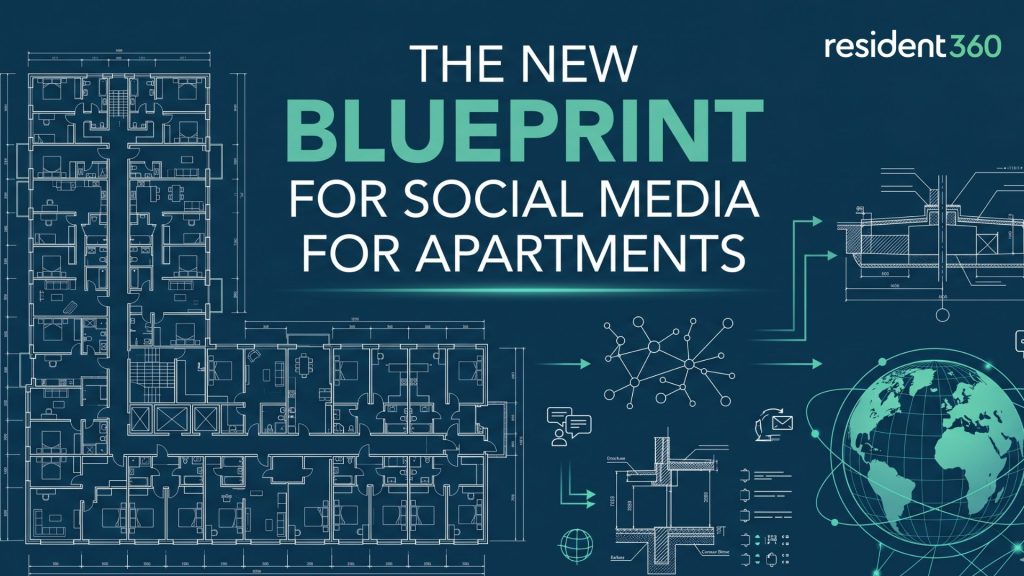
Balancing Organic Trust and Paid Reach to Boost Occupancy
Social media for apartments is often thrown around as a catchall marketing phrase. Property teams know they need an active presence, but a fundamental misunderstanding remains regarding how different strategies actually influence physical occupancy.
Too many properties fall into the trap of treating networks as a digital chore. They post intermittently, launch arbitrary promotions, and wonder why their efforts fail to fill vacant units.
For real leasing velocity, you must stop viewing organic content and paid campaigns as separate, isolated tactics. Instead, you need to understand where each strategy shines and how to combine them into a scalable engine.
The Line Between Reputation and Reach
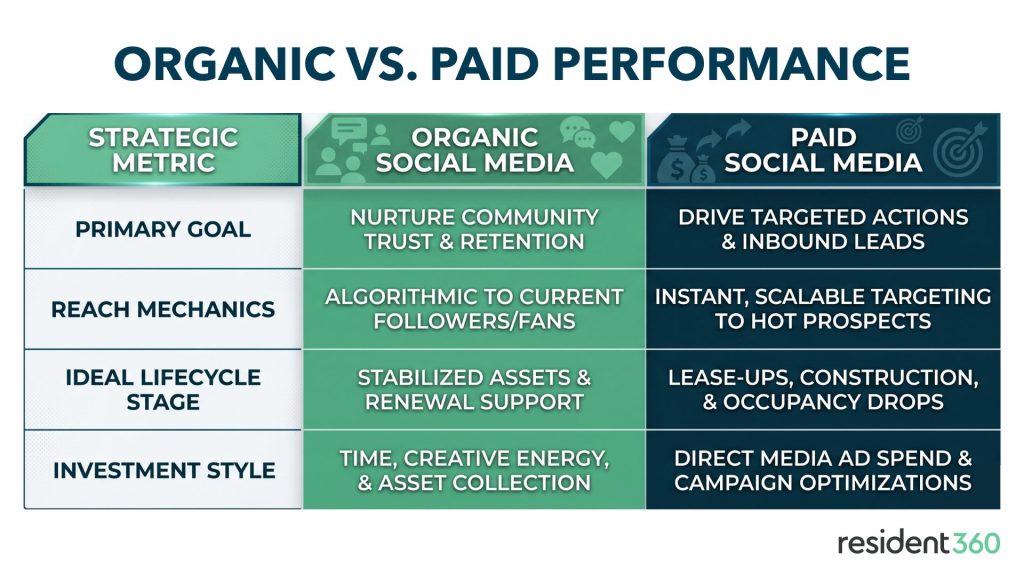
The difference between organic and paid content comes down to intent, investment, and execution.
- Organic Social Media: This is your unpaid footprint — your standard posts, Reels, Stories, and community updates. The job of organic content is to build brand awareness, nurture resident retention, and establish long-term property credibility.
- Paid Social Media: This involves placing real ad dollars behind strategic campaigns inside Meta Ads Manager. Paid campaigns focus entirely on targeted lead generation, traffic routing, website conversions, and immediate market velocity.
A simple way to look at this division is that organic builds your reputation, while paid accelerates your visibility. One nurtures your current audience, while the other scales your performance to high-intent prospects.
 Where Most Apartment Teams Miss the Mark
The biggest misconception our digital team encounters is the expectation that organic posts alone will solve major vacancy issues.
Posting a high-quality photo of a resident social hour or a beautifully styled charcuterie board at a community event is fantastic for resident sentiment. However, that post will rarely compel a prospect in a highly competitive market to walk in and sign a lease.
Properties commonly trip over these operational hurdles:
- The Checklist Mindset: Forcing on-site teams to post a set number of times per week without a core creative direction leads to uninspired, low-performing feeds.
- Boosting Without a Plan: Hitting the blue button directly on your page layout is not a real paid media strategy. It increases local visibility slightly, but it lacks the necessary audience segments, rigorous A/B testing, and deep analytics found inside Ads Manager.
- The Broken Prospect Journey: Prospects thoroughly vet your social profiles before booking a tour. If your paid ads are active but your organic profiles haven’t seen a fresh update in months, you break the chain of brand consistency.
Beyond fixing these common structural mistakes, driving long-term portfolio growth requires implementing creative, high-yield digital strategies across your entire funnel. Explore our complete playbook on multifamily marketing ideas to discover new tactical plays for your team.
Building a Foundation That Converts
Organic content is your community’s foundation. It serves as visual proof that your property is well-managed, welcoming, and active.
Beyond making current residents feel valued when they see themselves highlighted on your feed, consistent organic activity provides exceptional search engine support. Active social signals feed into your local search footprints, including your Google Business Profile and your website’s overall domain authority.
To maximize your organic reach, focus your attention on the channels where your target demographics spend their time:
- Instagram & Facebook: These remain your baseline requirements. Instagram is the primary visual hub for Millennial and Gen Z renters, who highly prize aesthetics and lifestyle fit.
- TikTok: This platform is increasingly vital for new construction lease-ups. Younger renters are actively shifting away from traditional search engines and utilizing social networks to find new homes. A search for best apartments in San Diego on TikTok pulls up immersive video walk-throughs that influence decisions long before prospects hit an ILS.
- LinkedIn: While communities rarely need a standalone property profile here, your on-site leasing teams can leverage personal LinkedIn accounts to share neighborhood milestones. Humanizing the leasing process makes the asset feel accessible and less corporate.
Accelerating Performance With Meta Ads Manager
Paid social campaigns are your primary tool when you need immediate, scalable leasing velocity. If your asset is managing a new construction phase, navigating a sudden occupancy drop, or pushing a specific floor plan, paid ad campaigns give you the precision you need.
Unlike organic posts, an optimized paid campaign allows you to build hyper-targeted perimeters. You can retarget warm website visitors, build lookalike audiences based on your best current residents, or narrow your target down to specific life stages, such as local graduate students or corporate relocations.
Paid social is only as good as the infrastructure surrounding it. A successful campaign requires high-fidelity creative assets, professional ad copywriting, a frictionless landing page layout, and consistent data optimization to keep your cost-per-acquisition low.
To hear our team pull back the curtain on balancing these networks live, listen to the full debate on this topic in our Multifamily Marketers Podcast Episode 40.
Aligning Your Strategy for Long-Term Property Value
Your paid campaigns will convert poorly if you lack a strong organic foundation. When a prospect clicks on a paid social ad, their natural instinct is to click through to your main profile to see what your community is really like. If they find broken links, missing info, or zero recent activity, that hard-earned trust evaporates instantly.
If you suspect your property site is failing to convert the traffic coming from your digital campaigns, evaluating your user experience and underlying SEO structure with a professional multifamily website audit is the essential next step to plug those conversion leaks.
Conversely, strong organic branding stretches your apartment marketing budget. When your property’s reputation, digital reviews, and social content are tightly aligned, your paid ad campaigns convert more efficiently, lowering your overall cost-per-lease.
Stop managing your digital campaigns in fragments. The most profitable properties use organic social media to establish trust, paid ad networks to scale their reach, local reputation management to verify credibility, and resident retention strategies to protect bottom-line profitability.
Social media management isn’t just about chasing likes or follower counts; it is about supporting physical tours, securing signed leases, and maintaining long-term property performance.