Overview: A multifamily rebrand changes an apartment community’s or operator’s name, logo, and visual identity, typically triggered by an acquisition, major renovation, portfolio consolidation, or reputation reset. An analysis of more than 20 multifamily rebrands announced in 2026, including Equity Residential and AvalonBay’s merger into Vivmark Residential, shows acquisition as the leading trigger, followed by renovation-driven repositioning and portfolio-wide brand consolidation. Apartment rebranding efforts see the strongest leasing results when the new name matches a real, visible change in the resident experience, not just a new logo.
The Reason Behind a Rebrand Should Shape Everything About It
In July, two of the largest apartment landlords in the country decided their own names weren’t worth keeping.
Equity Residential and AvalonBay Communities, with a combined portfolio spanning hundreds of thousands of units and decades of brand recognition, announced they would merge under a new identity: Vivmark Residential.
Neither legacy name survived the deal. That’s not a footnote buried in an investor deck. That’s two of the most recognized brands in multifamily deciding a blank slate was worth more than everything they’d already built.
Zoom out from that single deal and the pattern gets more interesting.
Tracking real multifamily rebrands announced this year (not marketing refreshes but actual name and logo changes) turns up more than 20 examples across conventional apartments, student housing, and senior living. That volume isn’t random, and it isn’t vanity.
Every one of these rebrands has a specific trigger behind it, and the properties seeing real leasing lift from the change are the ones whose new identity actually answers that trigger. The ones that don’t are just paying for a new sign.
Acquisition Is Still the Most Common Trigger (and the Most Misunderstood)
New ownership renames a property almost reflexively, and it’s easy to read that as ego. It isn’t.
- Morgan Properties acquired the Corwyn South Point Apartments outside Atlanta and set plans to rename the community Arden at South Point.
- Pacific Urban Investors bought a 304-unit community called Meadow Creek in Tigard, Oregon, and it became Ansley Murrayhill.
- When PCCP and The Dinerstein Companies acquired two adjacent student housing properties near Texas A&M, they didn’t just rename them; they combined two aging assets, formerly 2818 Apartments and Parkway Place, into a single new brand: Sterling College Station.
Senior living operators do this even more aggressively, and the trade press tracks it weekly. A single quarter of deal activity turned up a former Revela community renamed Cedarhurst of O’Fallon, a former St. Anthony’s Senior Living renamed The Bellflower at Whispering Ridge, and a Martinez, California, community folded into the Charter Senior Living brand.
Rebranding for apartments and senior communities after an acquisition isn’t cosmetic. It resets search results still tied to the previous owner’s reputation, and it resets resident expectations at the exact moment operations actually change behind the scenes.
If you want to go deeper on what actually separates a rebrand that works from one that doesn’t, we covered it on Episode 28 of our podcast.
Renovation and Repositioning Rebrands Are a Signal, Not Decoration
The second-biggest trigger shows up wherever a building physically changes.
- Nationwide Realty Investors is renovating its Two Nationwide Plaza office tower in Columbus and renaming it The Centennial on High, timed to the company’s upcoming 100th anniversary.
- In High Point, North Carolina, a historic showroom building is becoming apartments under the name Elwood on Main.
- In Parkersburg, West Virginia, a 1934 building once known as the McDonough Apartments reopened this summer as Meridian Flats.
Each of these works for the same reason: the new name is paired with a renovation you can actually see, not just a fresh coat of paint on the website.
None of these names would mean anything without the renovation behind them. Industry coverage of successful apartment rebrands consistently points to the same requirement: residents have to see and feel the change, not just read about it on a new website.
A fresh name attached to the same worn carpet and the same slow maintenance response reads as false advertising within a month of move-in. A fresh name attached to a genuinely renovated building reads as proof.
Portfolio Consolidation Is the Quietest, Fastest-Growing Trigger
The least talked-about trigger is also becoming one of the most common: operators simplifying a portfolio of acquired brands into one name.
CarePartners Senior Living unified all 34 of its communities under a single new brand, Vineyard Park Senior Living, this spring. Meanwhile, AgeWell Solvere Living dropped two words and became AgeWell Senior Living, calling the move a return to a simpler, more recognizable parent brand.
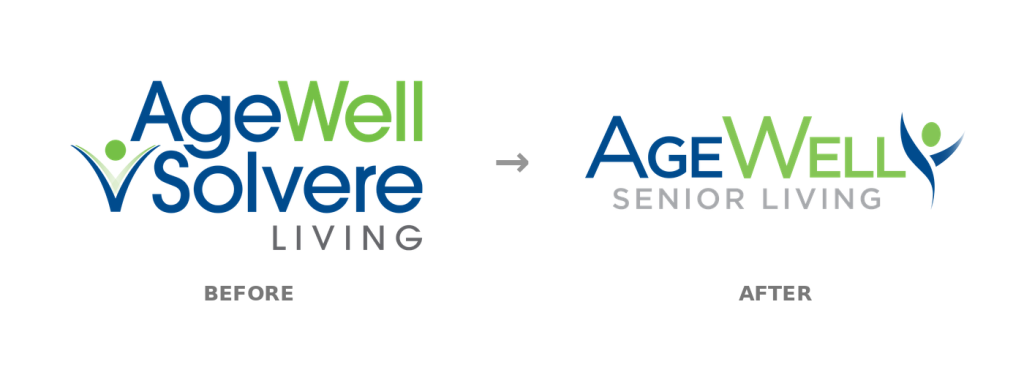
Neither change was about one specific property. Both were about the fact that managing five, ten, or thirty different community-level names stops being an asset once an operator hits real scale, and starts being a liability.
That liability is getting worse for a reason most owners haven’t fully clocked yet. AI platforms like ChatGPT, Perplexity, and Google’s AI Overviews increasingly synthesize and recommend based on how consistent a brand looks across every touchpoint: the website, the Google Business Profile, ILS listings, reviews.
A portfolio running under a dozen half-abandoned sub-brands doesn’t just confuse renters. It actively hurts how confidently an AI assistant can describe and recommend the property at all.
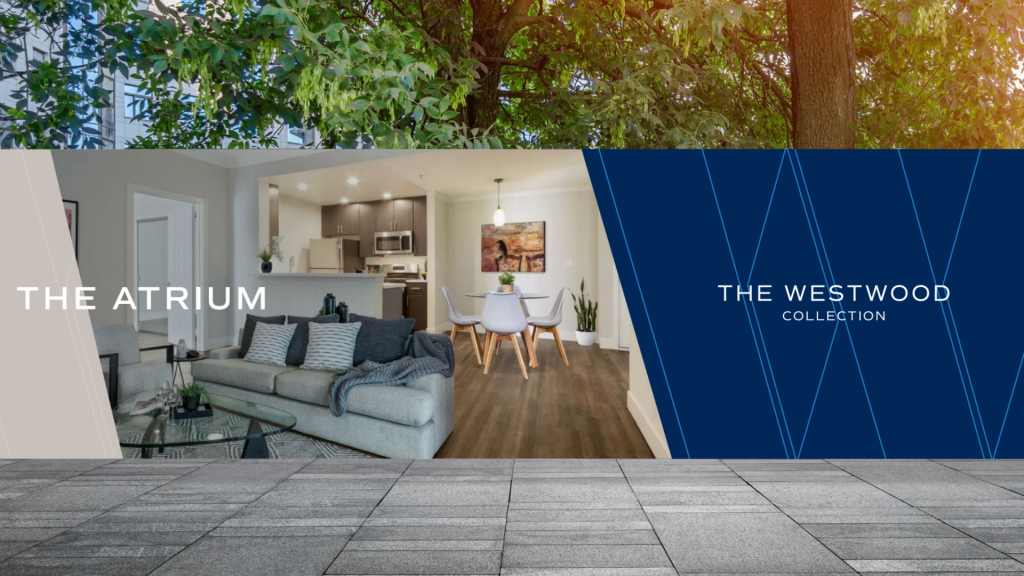
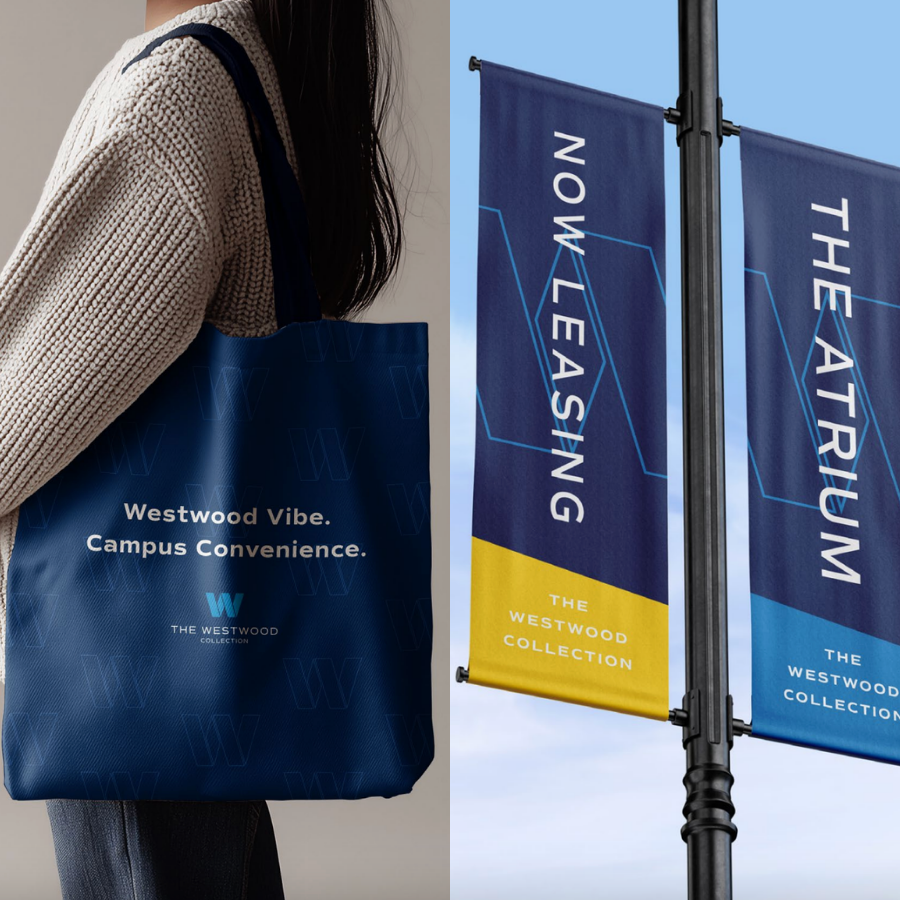
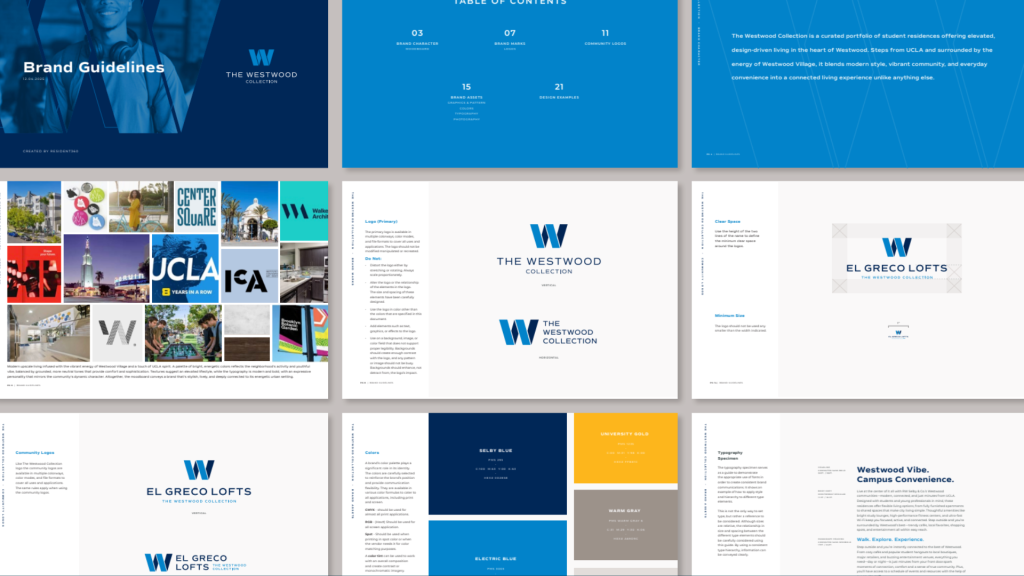
We saw this firsthand with one of our own clients. The Westwood Collection, a portfolio of seven student-housing communities steps from UCLA, had built real name recognition property by property over the years, especially around its signature blue.
What the portfolio didn’t have yet was one confident, unified visual identity to match. We rebuilt that system across all seven communities, each keeping its own character, paired with redesigned websites built for how students actually search and lease today.
The result was a stronger, more cohesive presence across the whole portfolio, not a different one. You can read more about it in our case study.
The Hardest Rebrand to Talk About Openly Is Reputation
No press release ever says a company is rebranding because its Google rating tanked. But the financial logic behind reputation-driven rebrands is well documented.
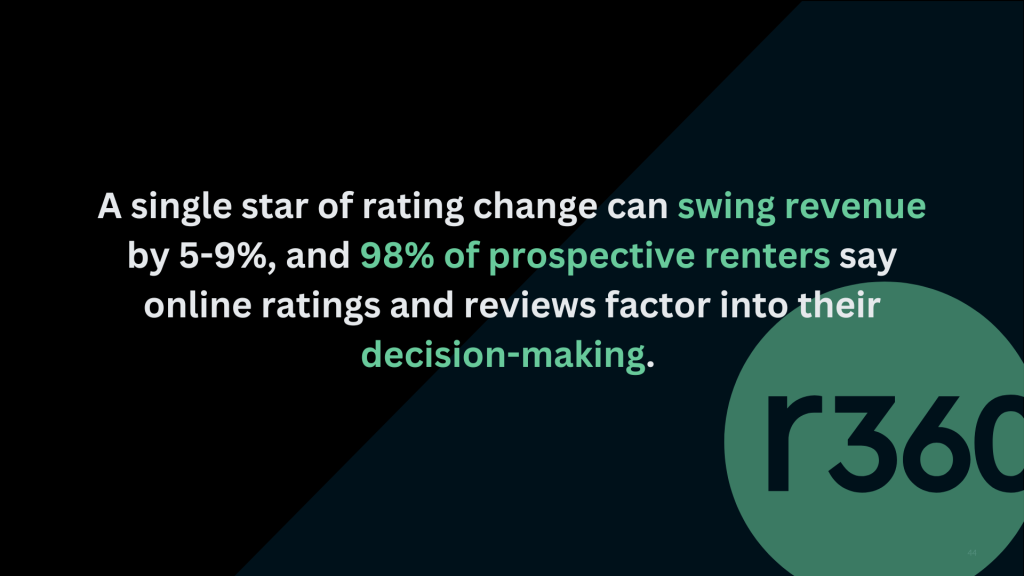
A new name can reset the top of a Google search result. It cannot reset what happens the first time a prospect calls the leasing office.
That’s the thread connecting every trigger on this list, whether it’s a merger the size of Vivmark Residential or a single community changing hands in a market nobody outside its zip code is watching.
A rebrand is a promise. The name is supposed to tell people something changed. The moment a resident, a prospect, or an AI assistant summarizing the property notices the promise and the reality don’t match, the rebrand stops working. It just becomes the new name people associate with the old problem.
If your community, or your portfolio, is sitting on one of these triggers right now, the real question isn’t whether to rebrand. It’s whether the story you’re about to tell matches the property people will actually walk into. That’s the harder, more interesting work, and it’s the work we do at Resident360 as a multifamily rebranding agency: building the strategy, the name, and the web presence around what’s actually changed, not just what looks good on a moodboard. If you’re weighing a full rebrand against a lighter refresh, we’re glad to help you figure out which one you’re really facing.
Next time you pass a familiar apartment sign wearing an unfamiliar name, ask what actually changed behind it. If the property can’t answer that, the rebrand can’t either.