Overview: Effective leasing agent training replaces presentations with practice: agents rehearse real conversations out loud, from the first phone call through the tour, the close, and follow-up. The strongest programs teach teams to answer pricing questions directly, ask every prospect why they’re moving, respond to new leads within minutes, and follow up with something useful instead of “just checking in.” Managers make the training stick by coaching one behavior at a time and tracking response times, tours, applications, and signed leases.
How does your company train leasing agents today? We’re gathering answers from multifamily teams across the country, and it takes about 2 minutes. Take the leasing training survey here.
Why Your Leasing Team’s Confidence Is a Training Problem
Ask a room of leasing agents to rate their confidence in closing a lease from one to 10 in front of their managers, and some will answer three.
That’s what happened when Caroline Mills, Resident360’s director of digital marketing, opened a recent leasing agent training.
By the end of the session, the same agents were typing nines and 10s into the chat. Nothing about their pricing, product, or market had changed. They had just finally practiced the conversations that win or lose a lease.
That’s the lesson for any property management company: effective leasing agent training is practice, not presentation. Agents rehearse every stage out loud, from the first call through the tour, the close, and follow-up, and managers coach one habit at a time until it sticks.
Most Leasing Teams Were Trained to Process Applications, Not Earn Them
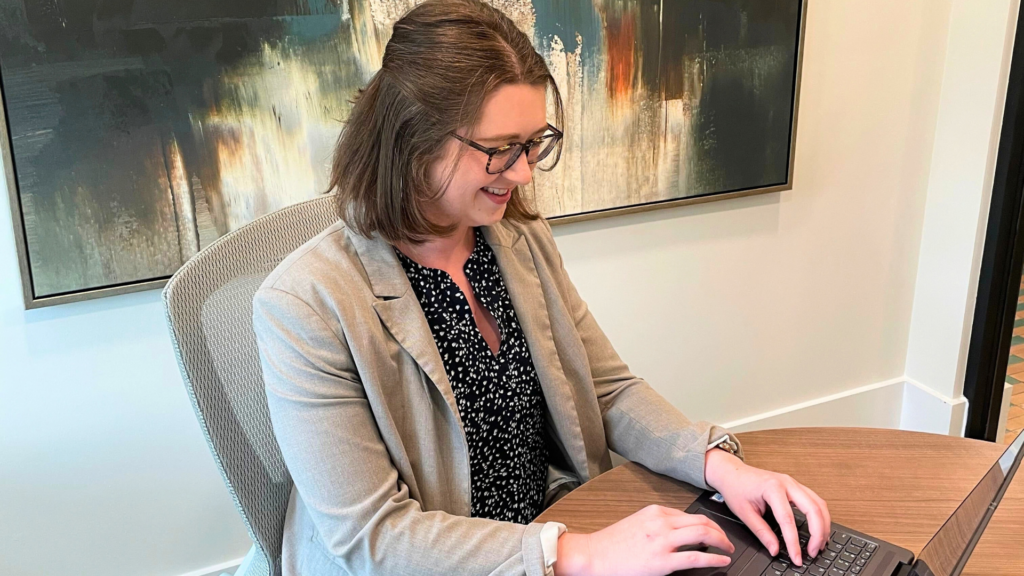
For years, plenty of communities never had to sell. They had wait lists. Prospects called already decided, and the leasing office’s job was paperwork. Caroline saw what that does to a team when she recently led a leasing training for a client’s onsite staff.
“Leasing conversations can become very transactional,” she said. “You were answering questions, these people were sending in applications, and then you were just doing the paperwork.”
That works until renters have options again. Then the same team has to do things it never practiced: find out what matters to a prospect, show how a home fits that person, answer real objections, and ask for the application. The skills didn’t disappear. Most teams just never built them.
Caroline knows the other side of that desk. She worked on site through COVID and through hurricane seasons on the eastern coast of North Carolina, when demand swung hard in both directions. What she took from it shapes everything below: a prospect should leave every conversation feeling like someone listened and helped them decide.
Want to hear the whole conversation? Caroline walks Josh through the training, role plays included, in Ep 59 of The Multifamily Marketers Podcast.
Property Management Training Sticks When Agents Practice Out Loud
Most property management training explains. Someone presents best practices, the team nods, and everyone goes back to the desk and handles the next call exactly as before. Caroline built her sessions around practice instead: mock calls, chat exercises, and live role plays where agents push back on each other with objections nobody planned.
One of those improvised moments became the highlight of the session. Playing a prospect, Caroline mentioned in passing that her cat, Ham, would be moving with her. The agent across from her kept bringing Ham back into the conversation, connecting the community to her life, and the whole group caught on.
“They started remembering pet names, and they made it a lot more personal,” Caroline said. Agents hear details like this every day. Practicing out loud is what turns a detail into something they use.
On the First Call, Answer the Price Question, Then Ask One Back
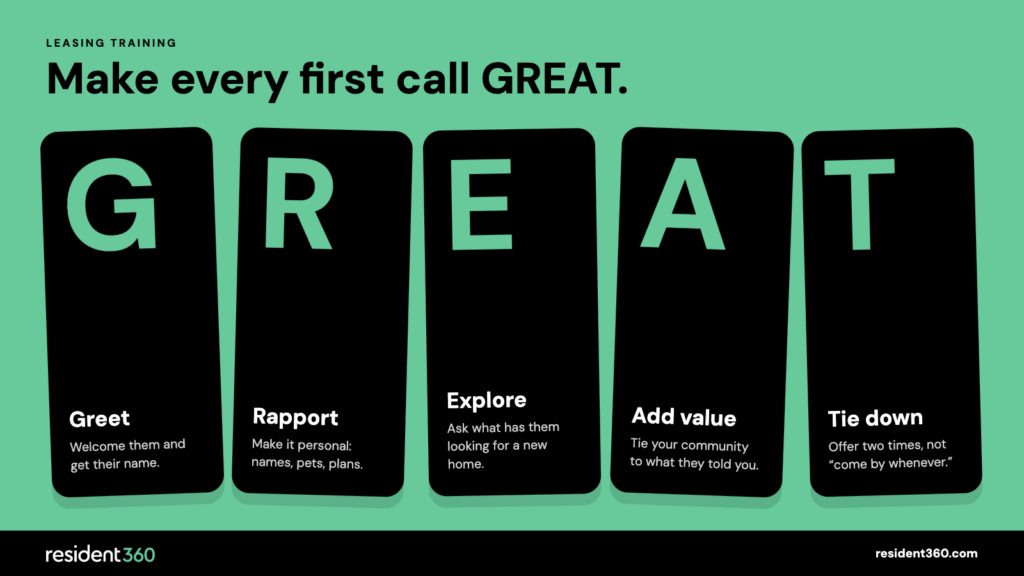
Caroline teaches first calls with a framework she calls the GREAT method: greet, rapport, explore, add value, and tie down the appointment. The steps sound simple. The difference shows up in how agents handle the moments that don’t fit the script.
During mock calls, Caroline had the rest of the team type each GREAT step into the chat as the agent hit it. Everyone practiced listening for the framework, not just using it, and the room started cheering each other on.
Take the prospect who opens with “What’s your cheapest apartment?” The instinct is to read off a price and wait. Caroline’s approach is to answer with accurate pricing right away, then ask a question: “Our one-bedrooms currently start at [price]. What’s most important to you in your next home?” A direct answer builds trust, and the question keeps the conversation going long enough to find out whether you have the right home for that person.
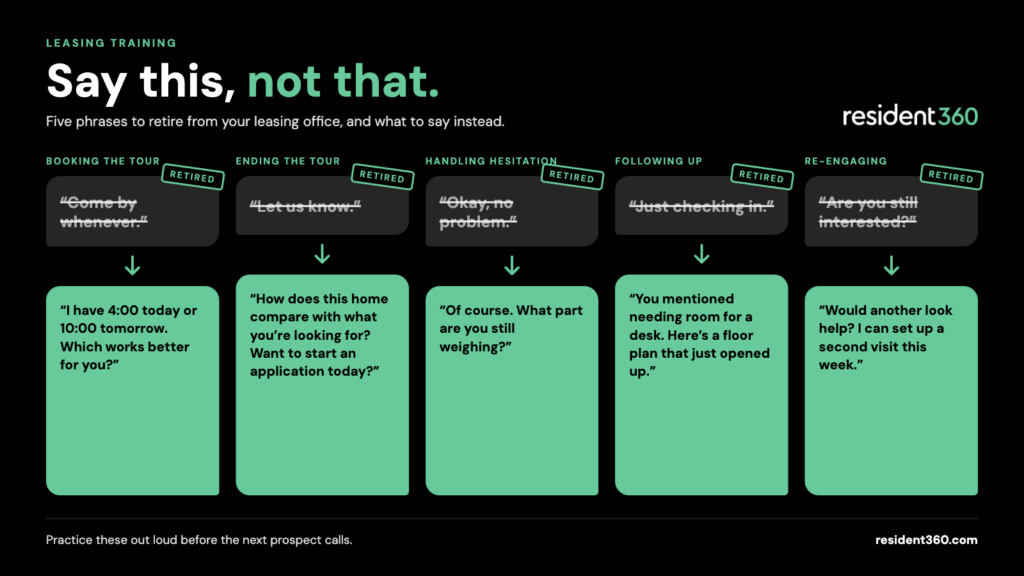
The last step matters just as much. “Come by whenever” isn’t an appointment. When a prospect in one session asked to visit before closing, the agent offered to stay late and asked what time to expect them. That’s a tied-down appointment, and it came from practice, not a script.
Ask Every Prospect Why They’re Moving
Asked for the single most useful question on an inbound call, Caroline didn’t hesitate: “What has you looking for a new home?”
The answer shapes everything that follows. A job relocation opens up rapport (“Where are you coming from?”) and lets the agent add value right away, such as mentioning that the community sits minutes from that employer. A prospect who needs more storage should see the closets first. Someone working from home needs to picture a desk in the second bedroom.
It also changes how agents talk on the tour. “There’s a washer and dryer” describes a feature. “You can do laundry at home instead of spending Saturday at the laundromat” describes a better week. Prospects tour several communities, and the one that connects its homes to their reasons for moving is the one they remember.
A Five-Minute Response Goal Means Nothing Without Coverage
Renters don’t wait long. In an Apartments.com survey of more than 20,000 renters, 31% said they expect a same-day response to an inquiry, and 83% expect one by the end of the following day. More than half expect to research more than five properties before choosing.
Caroline coaches teams toward a five-minute response target for new leads, and then asks the harder question: who answers when the office is busy? She remembers Saturdays on site alone, with six back-to-back tours, the phone ringing, and a resident asking for a coffee refill.
“A target without any coverage is just a number,” she said. Managers need to decide who covers inquiries during tours and lunch breaks.
Automation helps, but only up to a point. An auto-reply can confirm that an inquiry arrived or that a tour got booked. The prospect still needs a real answer.
To learn more about where automation helps and where it doesn’t, read our blog on how multifamily is actually using AI for property management in 2026.
Walk the Tour Route Before the Prospect Does
A strong tour begins first thing in the morning, before anyone books a time. Caroline teaches agents to walk the tour route daily: the office, the common areas, and the model, checking that the lights work and the temperature feels right. She has seen what happens otherwise. A prospect arrives early, there’s trash on the walkway to the unit, and the agent spends the first five minutes flipping on lights instead of talking.
Preparation also means reviewing the guest card. An agent who spent 10 minutes on the phone learning what a prospect needs, then never mentions it on the tour, has wasted the call. Greet them by name, recap what they told you, and plan the route around it.
During the tour, ask for reactions as you go. “How does this kitchen compare with where you live now?” tells you early whether something isn’t working, while there’s still time to show a different floor plan or address the concern. Caroline calls these soft closes, and they make the final ask feel like a natural next step instead of a sudden turn.
When Prospects Bring Up Bad Reviews, Answer With Facts
Some of the hardest conversations happen at communities that just changed hands. A new management company takes over, a new team starts, and prospects arrive having read years of reviews about problems the current staff had nothing to do with. Caroline has worked with teams in exactly that spot.
Her advice is to stay factual. Acknowledge the concern and ask what worried them most. Then respond only with facts you can support: if management changed, say when, and if the maintenance process improved, describe what changed. If an issue is still being fixed, say so rather than implying it’s solved. Steer clear of comments about who lives at the community, which can create Fair Housing problems, and of promises the team can’t keep, especially during a lease-up.
“A prospect wants a credible answer, not a reason to just doubt everything you’ve said,” Caroline said. A defensive or emotional reply gives them that reason.
Ask for the Application Instead of Saying “Let Us Know”
Plenty of great tours end with “Let us know.” Agents worry about seeming pushy, or assume the prospect will speak up when ready. Caroline’s view is simpler: people often don’t apply because nobody asked them to. She teaches agents to ask how the home compares with what the prospect wants and, if it fits, to invite them to apply that day.
When a prospect says “I need to think about it,” the best response is a question: “What part are you still weighing?” Then the agent stops talking. Caroline’s LEAR method for handling objections starts there, with listening, because the real concern might be price, layout, timing, or a partner who hasn’t seen the home. Launching into a pitch before knowing which one wastes the moment.
How Much Follow-Up Is Enough?
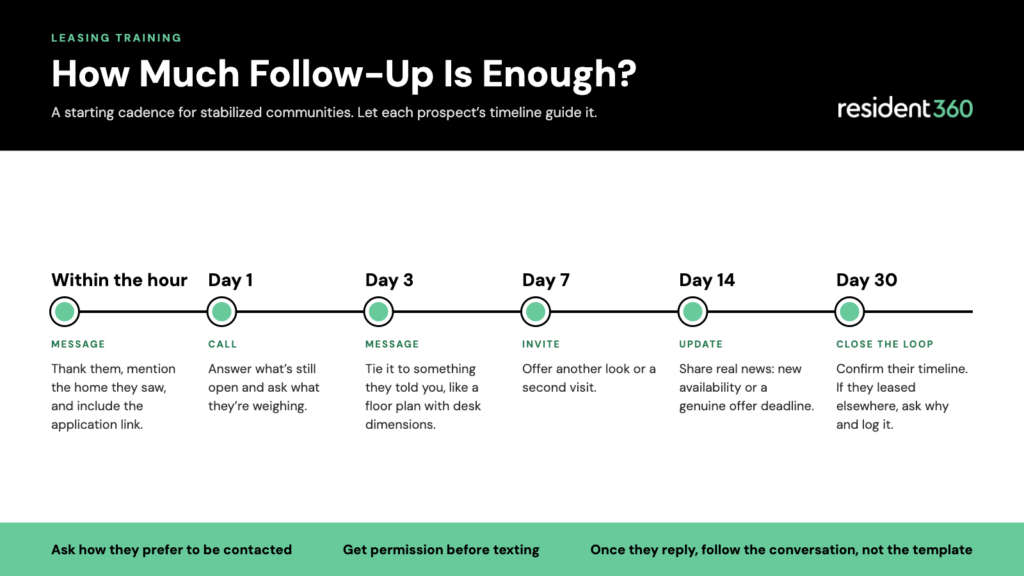
Follow-up works the same way. Caroline would retire one phrase from every leasing team: “Just checking in.” Each message should give the prospect something useful, like a floor plan with dimensions for the desk they mentioned, or photos of the corner unit to show a partner at home. Urgency should come from something real too, such as actual availability, a genuine special deadline, or the prospect’s move-in date.
To learn more about which offers move renters and which ones don’t, read our blog on 150+ apartment concessions and why they are or aren’t working.
For stabilized communities, Caroline’s starting cadence is a message within an hour of the tour, a call the next day, and touches around days three, seven, 14, and 30. She treats it as a starting point, not a script.
Someone moving next week needs different help than someone planning six months out. Ask how prospects prefer to be contacted, get permission before texting, honor opt-outs, and log every contact. Once a prospect replies, follow the conversation instead of sending the next template.
When a prospect leases somewhere else, ask why and record the answer. That feedback tells marketing and operations whether the issue is price, product, location, or process.
To learn more about where leads slip between marketing and leasing, read our blog on why apartment marketing traffic isn’t converting into leases.
Make Leasing Training Stick by Coaching One Habit at a Time
Everyone leaves a good training motivated. A month later, most teams have slid back to old habits. Caroline’s fix is to pick one behavior first, such as completing discovery on every call, walking the tour route each morning, or sending useful follow-ups after every tour. Practice it in short role plays, review real examples, and give specific feedback. “Ask why they’re moving” is easier to act on than “be better at discovery.”
Then measure it. Watch response times, appointments, tour attendance, applications, and signed leases, while accounting for changes in pricing and lead volume.
Caroline opened and closed her recent session the same way, asking agents to rate their confidence in closing leases from one to 10. At the start, answers ranged from threes and fours to sevens and eights, admitted in front of their own leaders.
By the end, the chat filled with nines and 10s, and the most confident agents were the ones who had volunteered for role plays. That pattern is the case for practice in one picture. It’s also the approach behind our live leasing agent training, the Leasing Team Accelerator, which builds two short sessions around a property’s real leads and objections.
Every company needs a formal leasing training plan, whatever it calls it. Agents arrive from different companies, asset types, and markets, so two years of experience can mean two very different playbooks.
A standard program gives managers a baseline. It also makes diagnosis easier: if your team handles every call, tour, and follow-up well and leases still don’t come, the problem is likely price, product, or location, not your people.
Use What the Prospect Tells You
Asked for the one thing she wants teams to remember, Caroline came back to the prospect. Their reason for moving should shape the questions agents ask, what they show on the tour, and how they follow up. Every conversation should end with a clear next step.
None of that requires a new budget. It requires a team that has practiced the conversation before the prospect calls. Pick one conversation and rehearse it with your team this week. Which one would make the biggest difference at your property?
Get in touch with our team to learn more about the Leasing Team Accelerator and get pricing.